Hard water stains are common mineral deposits that leave unsightly marks on faucets, glass, and tiles. These stains form when water with high mineral content evaporates, leaving behind calcium and magnesium residues. Removing them doesn’t require harsh chemicals or expensive products.
A simple solution to remove hard water stains is using vinegar or lemon juice, which dissolve mineral buildup effectively. Applying these natural acids with a cloth or sponge allows the stains to break down without damaging surfaces.
This guide will walk through easy steps to treat hard water stains with household items, helping restore surfaces quickly and safely. Understanding the best techniques can save time and prevent further buildup.
Understanding Hard Water Stains
Hard water stains form from mineral buildup and regularly appear in specific household areas. These deposits can damage surfaces if not managed and vary by location and material.
What Causes Hard Water Stains
Hard water contains high levels of dissolved minerals, mainly calcium and magnesium. When water evaporates, these minerals remain as deposits, causing white or cloudy stains.
Soap scum often combines with minerals, making stains tougher to remove. The mineral buildup can clog pipes and reduce appliance efficiency if left untreated.
Common Areas Affected by Hard Water
Hard water stains frequently appear on faucets, showerheads, and sinks where water repeatedly evaporates. Bathroom tiles and glass shower doors often develop cloudy spots.
Kitchen sinks and dishwasher interiors are also prone to buildup. Outdoor hoses, sprinkler heads, and water fixtures show stains in areas with unrestricted water exposure.
Types of Surfaces Prone to Hard Water Stains
Porous surfaces like natural stone floors and grout absorb minerals more easily, leading to deeper stains. Non-porous surfaces such as glass, stainless steel, and porcelain collect mineral deposits on the surface visibly.
Metal surfaces may show signs of corrosion along with stains if exposed for long periods. Understanding the surface type helps determine effective cleaning methods.
Assessing the Severity of Stains
Understanding the type and extent of hard water stains helps determine the best removal method. Different stains require tailored approaches based on their visibility and hardness to avoid damage and achieve efficient cleaning.
Identifying Light Versus Stubborn Stains
Light stains are often thin, white, or chalky films visible on glass, faucets, or tiles. These usually come off with mild scrubbing or gentle cleaners like vinegar or baking soda.
Stubborn stains appear thicker, often with a rough texture or discoloration. They may include mineral buildup hardened over time. These stains need stronger treatments, such as commercial descalers or repeated application of acidic solutions.
To distinguish, try wiping the area with a damp cloth first. If residue remains but wipes off easily, it’s likely light. If it resists pressure or scrubbing, it’s stubborn and may require mechanical removal or stronger chemicals.
Factors Influencing Stain Removal Methods
Surface material significantly impacts which products and tools to use. For example, acid-based cleaners can damage natural stone but work well on glass and metal surfaces.
The age of the stain also matters. Newer stains dissolve easily, while old ones may require soaking or professional equipment.
The frequency of water exposure influences the buildup of hardness. Areas with constant moisture tend to develop thicker, more resilient deposits that need repeated treatment.
Safety and environmental factors should guide choices, too. Opt for non-toxic, biodegradable options when possible, especially in homes with pets or children.
Effective Home Remedies for Hard Water Stain Removal
Hard water stains can be tackled using several common household ingredients that help break down mineral deposits. Each method relies on natural acids or mild abrasives to dissolve or scrub away the stains safely.
Using Vinegar for Hard Water Stains
White vinegar contains acetic acid, which effectively dissolves calcium carbonate deposits commonly found in hard water stains. To use, soak a cloth or paper towel in vinegar and apply it directly to the stain. Let it sit for 15 to 30 minutes for better results.
For larger surfaces such as sinks or showerheads, fill a spray bottle with vinegar and spray the affected area. After soaking, scrub gently with a non-abrasive sponge or brush to remove loosened deposits. Rinse thoroughly with water to avoid lingering vinegar odor.
Baking Soda Applications
Baking soda acts as a mild abrasive and helps neutralize acidic deposits. Make a paste by mixing baking soda with water until it reaches a spreadable consistency. Apply this paste to hard water stains and let it rest for 10 to 15 minutes.
Use a damp cloth or soft brush to scrub the area, focusing on spots with heavier buildup. Baking soda is safe on most surfaces, including glass, tile, and stainless steel. Rinse well to remove all residue after cleaning.
Lemon Juice as a Natural Cleaner
Lemon juice contains citric acid, which breaks down mineral stains similarly to vinegar but with a citrus scent. Apply fresh lemon juice directly to the stain or soak a lemon slice in the affected area.
Allow the lemon juice to sit for about 10 minutes before scrubbing to loosen deposits. This method works well on faucets, sinks, and glass surfaces. Rinse thoroughly to prevent stickiness from lemon residue.
Commercial Cleaners and Solutions
Commercial hard water stain removers come in various forms designed to tackle mineral buildup efficiently. Choosing the right product and using it safely ensures effective stain removal without damaging surfaces.
Types of Commercial Products
There are several types of commercial hard water stain removers, including acid-based cleaners, alkaline cleaners, and enzyme-based solutions. Acid-based products often contain hydrochloric acid or sulfamic acid, which break down calcium and lime deposits quickly. These are ideal for toilets, tiles, and metal fixtures.
Alkaline cleaners work better for organic deposits but can be less effective on mineral stains. Enzyme-based products use natural enzymes to dissolve buildup over time and are safer for sensitive surfaces, but may require longer application.
Many commercial products come in sprays, gels, or powders, allowing users to choose based on surface type and convenience.
When to Use Specialized Cleaners
Specialized commercial cleaners should be used when homemade remedies like vinegar or baking soda fail to remove hard water stains completely. For severe buildup, such as thick lime scale on faucets or showerheads, strong acid-based formulations are more efficient.
Surfaces such as glass shower doors, stainless steel appliances, and porcelain toilets often benefit from products designed specifically for their material. Avoid routine use on delicate finishes like natural stone or painted surfaces, as harsh chemicals can cause damage.
Follow product instructions closely for best results and apply based on the stain’s severity and location.
Safety Tips for Chemical Cleaners
Always wear gloves and eye protection when handling chemical cleaners to prevent skin irritation or eye injury. Work in well-ventilated areas to avoid inhaling fumes, especially with acid-based products.
Avoid mixing different cleaners, as combining acids and bleach can release toxic gases. Store chemicals in their original containers and keep them away from children and pets.
Dispose of any leftover cleaner according to local hazardous waste guidelines. Rinse surfaces thoroughly after treatment to remove chemical residue that could cause corrosion or harm on contact.
Techniques for Removing Hard Water Stains from Bathroom Fixtures
Hard water stains require targeted cleaning methods tailored to fixture materials. Using the right cleaners and tools prevents damage while effectively removing mineral buildup.
Cleaning Glass Shower Doors
To remove hard water stains on glass shower doors, begin with a mixture of equal parts white vinegar and water. Spray the solution generously and let it sit for 10–15 minutes to dissolve mineral deposits.
Use a non-abrasive sponge or microfiber cloth to scrub gently. For stubborn spots, apply a paste of baking soda and water, then scrub carefully. Rinse thoroughly with warm water to avoid residue.
Dry the glass with a soft towel to prevent new water spots. Avoid harsh chemicals or abrasive pads that can scratch the glass surface.
Treating Faucets and Showerheads
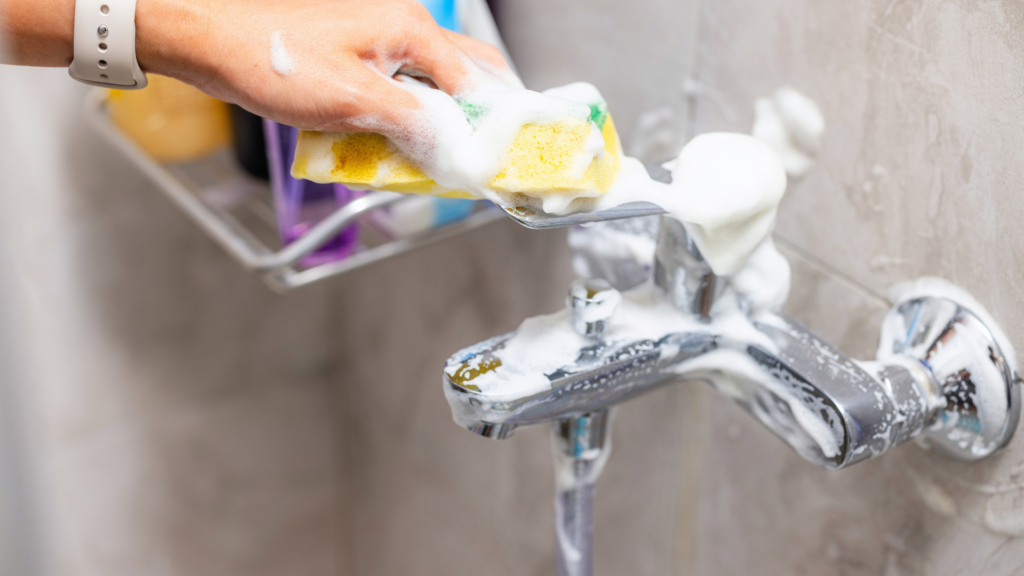
Soak a cloth or paper towel in white vinegar, then wrap it around faucets or showerheads with hard water buildup. Leave it for 30 minutes to an hour, depending on the severity.
For showerheads, removing and soaking them in vinegar overnight can help clear mineral deposits from the nozzles. After soaking, use a soft brush or toothbrush to loosen deposits.
Rinse fixtures well with warm water and wipe dry. Avoid bleach or acidic cleaners that could damage metal finishes like chrome or brass.
Restoring Tile and Grout
Apply a vinegar-water solution or a commercial hard water stain remover directly to affected tiles and grout. Use a stiff brush to scrub grout lines to loosen deposits.
For tougher stains, a paste of baking soda and water applied to grout can improve results. Allow it to sit for several minutes before scrubbing.
Rinse the area with warm water and dry completely to prevent mold growth. Avoid using metal brushes that may damage grout texture and grout coloring.
Removing Hard Water Stains from Kitchen Surfaces
Hard water stains on kitchen surfaces require specific cleaning methods depending on the material and usage. Using the right agents and techniques protects the surfaces and effectively breaks down mineral deposits.
Addressing Stains on Sinks and Countertops
For stainless steel sinks, apply white vinegar with a soft cloth to dissolve mineral buildup. Let it sit for 5–10 minutes before scrubbing gently with a non-abrasive sponge. Rinse thoroughly and dry with a microfiber cloth to avoid water spots.
Granite and marble countertops need a milder approach. Mix a few drops of dish soap with warm water and wipe the stains using a soft cloth. Avoid acidic cleaners like vinegar on natural stone, which can etch the surface.
For tough spots, make a paste from baking soda and water. Apply to the stain, let it sit for 15 minutes, then wipe away with a damp cloth. Always test any cleaner on a small area first to prevent damage.
Cleaning Appliance Exteriors
Chromed or stainless steel appliance surfaces respond well to vinegar or lemon juice applied with a microfiber cloth. These acidic solutions break down limescale without scratching.
Avoid abrasive pads or harsh chemicals that can damage finishes. Wipe in the direction of the grain to maintain shine.
For plastic or painted surfaces, use mild soap and water. Rinse and dry completely. Regularly cleaning prevents thick, hard water buildup, reducing the need for intensive treatments.
How to Prevent Hard Water Stains in the Future
Preventing hard water stains involves consistent care and specific tools to reduce mineral buildup. Maintaining clean surfaces, treating your water supply, and applying simple home remedies can all help minimize stains over time.
Routine Cleaning Practices
Regular cleaning stops minerals from settling and hardening on surfaces. Use a mild acidic cleaner, like diluted vinegar, at least once a week to wipe down faucets, sinks, and shower doors. Avoid abrasive scrubbers that can scratch surfaces, making stains harder to remove.
Dry surfaces after use with a soft cloth to prevent water droplets from evaporating and leaving mineral deposits behind. This habit is particularly effective on glass and metal fixtures. Keeping areas dry reduces buildup before it starts.
Water Softener Systems
Water softeners reduce hardness by exchanging calcium and magnesium ions with sodium or potassium. Installing a softener at the main water supply point can treat water throughout your home. This reduces scale formation on pipes, appliances, and fixtures.
Choose between salt-based or salt-free systems based on your water quality and budget. Salt-based softeners are more effective for high mineral levels, while salt-free systems prevent scale without adding sodium. Regular maintenance, like refilling salt, is required for salt-based models.
DIY Preventive Measures
Simple DIY solutions help protect surfaces daily. Applying a thin layer of car wax or a silicone-based sealant on tiles and glass can create a water-repellent barrier. This helps water bead and run off, minimizing mineral deposits.
Use a squeegee after showers to remove water from glass doors and tiles. Also, installing faucet aerators reduces water flow, limiting the amount of mineral-rich water that can collect. These actions reduce the chances of hard water stains forming.
Dealing with Persistent or Old Hard Water Stains
Old or stubborn hard water stains require more than basic cleaning solutions. Using stronger methods and knowing when to get expert assistance can save time and prevent damage.
Advanced Removal Techniques
For tough stains, use white vinegar or lemon juice soaked for 10-15 minutes to break down mineral deposits. After soaking, gently scrub with a non-abrasive pad to avoid scratching surfaces.
Another effective option is a commercial lime and scale remover. Apply according to package instructions, test in a small area first, and avoid mixing with bleach or ammonia to prevent harmful fumes.
For glass or ceramic, a paste of baking soda and water applied to the stain can also work. Leave the paste for 15 minutes, then scrub gently.
Use gloves when handling acid-based products and ensure the area is well-ventilated.
When to Seek Professional Help
If stains resist all removal attempts or cover large, delicate surfaces (like natural stone), hiring a professional cleaner is advised. Professionals use equipment and safe chemicals that minimize risk to your fixtures.
For appliances like washing machines or dishwashers, persistent stains might indicate internal buildup that requires servicing beyond surface cleaning.
Significant discoloration or etching on glass or metal may need expert restoration to avoid permanent damage.
Prompt consultation prevents worsening conditions and costly repairs.
Environmental and Material Considerations
Effective hard water stain removal requires attention to both the environmental impact of cleaning agents and the specific materials being cleaned. Selecting the right products and understanding how surfaces react ensures optimal results without damage or unnecessary waste.
Choosing Eco-Friendly Cleaning Options
Eco-friendly cleaners reduce harm to waterways and residential ecosystems. Vinegar, baking soda, and citric acid are common natural alternatives that effectively break down mineral deposits without toxic residues.
Avoid bleach and strong acids, as they contribute to water pollution and can be harmful if misused. Biodegradable products labeled phosphate-free also minimize environmental damage.
When purchasing, look for non-toxic, plant-based, and EPA Safer Choice certified cleaners. These options balance efficacy with sustainability and safety for both users and the environment.
Understanding Surface-Specific Care
Hard water stains affect surfaces differently depending on material composition. Porous surfaces like natural stone can etch or discolor from acidic cleaners, so use pH-neutral products and test in an inconspicuous area first.
Glass, ceramic, and stainless steel tolerate mild acids better, but abrasive scrubbing can cause scratches. Use soft cloths or non-scratch pads to preserve surface integrity.
For fixtures, carefully check manufacturer guidelines on cleaning agents. Using incorrect products can void warranties or cause irreversible damage to delicate finishes or coatings.